Hangers Wholesale: Find the Right Hangers for Your Business
Choosing the right hangers wholesale option can make a big difference for clothing retailers, boutiques, hotels, and garment businesses. The right hangers protect clothing, improve displays, and help keep costs under control. But how do you choose the right type and supplier? This guide explains what to check before placing a bulk order.

What Is Hangers Wholesale?
Hangers wholesale means buying clothing hangers in larger quantities from a manufacturer, distributor, or wholesale supplier, usually at a lower per-unit price. Instead of purchasing a few hangers at retail prices, businesses can order in bulk for regular use, resale, or store displays.
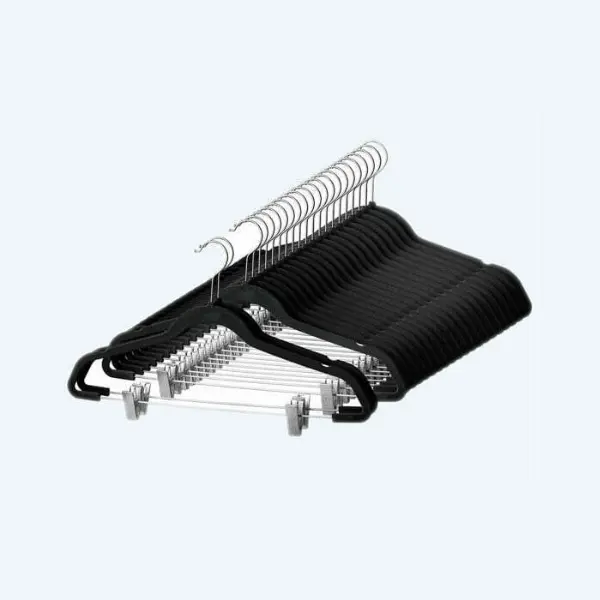
Wholesale options may include wooden, metal, plastic, velvet, or specialty hangers. The right choice depends on the clothing being displayed, your budget, store style, and expected usage.
For example, a luxury clothing boutique may prefer wooden hangers for a premium appearance, while a busy garment store may need durable metal or plastic options. Understanding these differences is the first step toward making a practical purchase.
Why Buying Hangers in Bulk Makes Sense
For businesses that use hundreds or thousands of hangers, buying individually can quickly become expensive. Bulk purchasing can reduce the average cost per hanger and make inventory planning easier.
However, the lowest unit price should not automatically determine your choice. A cheaper hanger may break more easily, damage delicate clothing, or create an inconsistent store display.
Instead, consider the total value. Product quality, durability, shipping, storage, supplier reliability, and replacement rates can all affect your real cost.
Shopify's current wholesale guidance recommends checking product quality, supplier reliability, minimum order quantities, shipping, payment terms, and samples before committing to a supplier.
How to Choose the Right Hangers Wholesale
1. Identify Your Business Requirements
Start by asking what you actually need.
Are the hangers for a retail clothing store? A fashion boutique? A hotel? A showroom? An online apparel business? Or a garment manufacturer?
Different businesses need different hanger features.
Consider:
- Type of clothing
- Average garment weight
- Available storage space
- Store design
- Number of garments
- Expected hanger lifespan
- Required quantity
- Budget per unit
A clear requirement list prevents you from buying too much of the wrong product.
2. Choose the Right Hanger Material
Material has a major effect on appearance, strength, and price.
Wooden hangers offer a polished and premium appearance. They are often suitable for suits, jackets, shirts, and upscale retail displays.
Metal hangers are useful when strength and a slim profile are important. Their design can also help businesses maximize hanging space.
Velvet hangers have a soft surface that can help clothing stay in place. Their slim shape is also useful when closet or display space is limited.
Plastic hangers are often chosen for their affordability and versatility, particularly where large quantities are required.
There is no single material that works for every business. Match the hanger to the garment and the environment where it will be used.
3. Check Size, Shape, and Construction
A hanger should support the garment properly.
Check the shoulder width, thickness, hook construction, clips if required, and overall shape. A hanger that is too narrow may not support a garment correctly. One that is too wide may stretch or distort certain clothing.
For heavier products such as coats and suits, look for stronger construction. For delicate garments, pay closer attention to smooth surfaces and suitable shapes.
If possible, request samples before placing a large order. Testing the hanger with your actual garments gives you a much clearer idea of quality than product photos alone. This sample-first approach is also recommended in current wholesale sourcing guidance.
4. Compare Minimum Order Quantities
Minimum Order Quantity, or MOQ, is the smallest quantity a supplier allows you to purchase.
For example, one supplier might require 100 hangers per order, while another may require 500 or 1,000.
A larger order can reduce your unit price, but it also means more money is tied up in inventory. You may also need additional storage space.
Before choosing a supplier, calculate how many hangers your business actually uses each month. Then compare that figure with the supplier's MOQ.
Do not order thousands of units simply because the price looks attractive. Unsold inventory still represents money and storage space.
5. Calculate the Complete Cost
When comparing hangers wholesale suppliers, look beyond the advertised unit price.
Your actual cost may include:
- Product price
- Packaging
- Shipping
- Customs or import charges
- Taxes
- Handling fees
- Storage
- Inspection costs
- Replacement costs
This is sometimes referred to as landed cost. Current wholesale buying guidance recommends comparing the complete cost rather than looking only at the supplier's listed price.
A supplier with a slightly higher unit price may still be more economical if shipping is lower and product quality is more consistent.
6. Evaluate Supplier Reliability
A good product is only useful if the supplier can deliver it consistently.
Before placing a large hangers wholesale order, ask about:
- Production time
- Delivery schedules
- Stock availability
- Quality-control procedures
- Return policies
- Damaged-product procedures
- Payment terms
- Reordering process
- Customization options
Pay attention to how clearly the supplier answers your questions. Good communication can become especially important when you need urgent restocking or have a quality issue.
Supplier evaluation guides also recommend checking references, reviews, samples, lead times, and customer service before committing to a wholesale relationship.
7. Consider Your Store's Visual Style
Hangers are not just functional products. They can also influence how customers see your clothing.
A premium boutique may benefit from coordinated wooden hangers. A modern retail store might prefer sleek metal designs. A wardrobe-focused business could choose slim velvet hangers to create a clean, organized appearance.
Consistency matters. Using one coordinated hanger style can make racks look more organized and professional.
If your business has a specific brand identity, you can also explore customized hanger options with branded elements, colors, or finishes where available.
Common Mistakes to Avoid
Buying Only on Price
The cheapest hanger is not always the most economical. Poor durability can lead to frequent replacement and inconsistent displays.
Fix: Compare quality, lifespan, shipping, and replacement costs alongside the unit price.
Ignoring MOQ
A large MOQ can leave you with more stock than you need.
Fix: Compare the supplier's minimum with your actual monthly usage.
Skipping Samples
Product photos cannot always show construction quality, finish, weight, or actual size.
Fix: Request samples and test them with your own garments.
Forgetting Shipping Costs
A low product price can become expensive after freight and other charges are added.
Fix: Ask for the complete delivered cost before placing your order.
Choosing the Wrong Hanger for the Garment
A lightweight hanger may not be suitable for heavy coats or suits.
Fix: Match the hanger's construction and shape to the garment category.
Not Planning Storage
Bulk purchasing requires somewhere to keep your inventory.
Fix: Estimate your storage capacity before placing a large order.
Where to Find More Information
When researching hangers wholesale, start with established suppliers, manufacturers, trade directories, and industry resources. Compare several suppliers instead of relying on the first quotation you receive.
For general wholesale purchasing guidance, Shopify explains how businesses can evaluate suppliers, compare MOQs, request samples, and review shipping and payment terms.
Industry standards can also be useful when product care or textile-related requirements are relevant. ASTM International publishes standards and guides covering various textile and consumer-product areas, including care instructions for textile products.
For a business buyer, it is also useful to maintain a simple supplier comparison sheet. Record the supplier name, hanger type, material, unit price, MOQ, sample results, shipping cost, lead time, and return policy. This makes future purchasing decisions much easier.
Conclusion
Finding the right hangers wholesale supplier is about more than getting a low price. Look at material, construction, garment compatibility, MOQ, complete costs, delivery, and supplier reliability. Start with samples, compare suppliers, and order according to real demand. Ready to improve your clothing displays? Explore suitable hanger options and choose a supplier that fits your business needs.
FAQs
1. What should I look for when buying hangers wholesale?
Look at material, durability, size, design, garment compatibility, MOQ, unit price, shipping, and supplier reliability. Request samples before making a large purchase whenever possible.
2. Is buying hangers in bulk cheaper?
Bulk purchases can provide a lower per-unit price, but the final saving depends on shipping, storage, taxes, and other costs. Always compare the complete delivered cost.
3. What type of hanger is best for a clothing store?
It depends on the clothing and store style. Wooden hangers can suit premium displays, metal hangers can provide strength and a slim profile, while velvet hangers can work well for space-saving displays.
4. What does MOQ mean in wholesale buying?
MOQ means Minimum Order Quantity. It is the smallest number of units a supplier allows you to purchase in an order. Always make sure the MOQ fits your expected demand and storage capacity.
5. Should I order samples before buying wholesale hangers?
Yes. Samples allow you to check the hanger's size, finish, strength, construction, and compatibility with your garments before committing to a large order. This can reduce the risk of receiving unsuitable stock.


Comments
Post a Comment